




Table of Contents Show
Those small, flesh-colored bumps that aren’t red or inflamed, but just sit under the skin, making your texture feel rough—they’re whiteheads. Unlike blackheads, they’re closed over, so they don’t have a dark tip. It’s tempting to try to squeeze them, but that usually leads to redness and can turn them into a bigger problem.
The good news is that whiteheads are one of the most treatable types of blemishes. With a consistent, gentle routine that focuses on unclogging pores, you can clear them up and prevent new ones from forming.
What Is a Whitehead, Exactly?
A whitehead is a clogged pore that’s closed. Here’s what happens:
- Your pore produces oil (sebum) and collects dead skin cells.
- This mix forms a soft plug inside the pore.
- A thin layer of skin grows over the top of the pore, sealing the plug inside.
- Because it’s sealed, the air can’t reach it to oxidize and turn it dark (like a blackhead). It stays as a small, whitish or skin-colored bump.
It’s a type of non-inflammatory acne, which means it hasn’t yet become infected and red. Your goal is to remove the plug before that happens.

Your Simple Routine to Clear Whiteheads
The strategy is to unclog, prevent new clogs, and be gentle. Harsh scrubbing will backfire.
Step 1: Cleanse with the Right Ingredient
This removes excess oil and debris on the surface.
- Use a Salicylic Acid Cleanser: Salicylic Acid (a BHA) is your best friend here. It’s oil-soluble, meaning it can get inside the pore to dissolve the oil-and-dead-skin plug. Use it once a day (usually at night), massaging it onto damp skin for a full 60 seconds before rinsing.
Step 2: Exfoliate to Unclog Pores
This is how you directly tackle the plug inside the whitehead.
- Chemical Exfoliation is a Must: Use a leave-on product with Salicylic Acid 2-3 times a week. This could be a toner, a treatment pad, or a lightweight serum. Apply it after cleansing.
- Consider a Retinoid: An over-the-counter retinol or adapalene gel (like Differin) is incredibly effective. It increases skin cell turnover, which helps push out the clog and prevents new ones from forming. Start by applying it 2-3 nights a week, after cleansing, and follow with moisturizer.
Step 3: Moisturize and Protect (Yes, Really!)
This keeps your skin balanced and prevents over-production of oil.
- Choose an Oil-Free, Non-Comedogenic Moisturizer: Hydrated skin is healthy skin. If you strip your skin dry, it may panic and produce more oil, leading to more clogs.
- Sunscreen Every Morning: This is non-negotiable, especially if you’re using retinol or exfoliants. Sun damage can worsen skin texture and pigmentation. Use a lightweight, non-comedogenic SPF 30+.
What You MUST NOT Do
- DO NOT SQUEEZE OR PICK: This is the most important rule. Whiteheads are deep and sealed. Trying to force them out can rupture the pore wall, cause severe inflammation, lead to scarring, and almost guarantee a red, angry pimple will form in its place.
- Don’t Use Harsh Scrubs: Physical scrubs can cause micro-tears and irritate the skin, worsening the situation.
- Avoid Pore Strips: They are ineffective for closed whiteheads and can damage your skin.
- Don’t Use Heavy, Pore-Clogging Products: Avoid thick creams, facial oils (like coconut oil), and butter-rich moisturizers on areas prone to whiteheads.

A Safe Way to Help a Whitehead Along
If a whitehead is very visible and has come to a clear, nearly-open head, you can try this gentle method:
- Wash your hands and face.
- Steam your face over warm water for 2-3 minutes to soften the skin.
- Wrap your fingertips in a clean tissue.
- Apply gentle, downward pressure on either side of the whitehead, not on top. If it doesn’t release with one try, stop immediately. It’s not ready.
- Immediately apply a salicylic acid treatment or a pimple patch to soothe the area.
When to See a Dermatologist
If you have many whiteheads that are very stubborn, or they don’t respond to 6-8 weeks of consistent over-the-counter care, a dermatologist can provide stronger solutions:
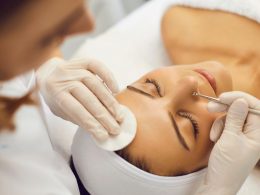
- Professional Extractions: Done safely and hygienically.
- Prescription-Strength Topicals: Like tretinoin or azelaic acid.
- Chemical Peels: Which can dramatically clear pores and improve texture.
The Bottom Line
Getting rid of whiteheads is about consistent, gentle pore-clearing, not aggressive attacks. Your toolkit is simple: a salicylic acid cleanser, a leave-on BHA or retinol a few times a week, and a good oil-free moisturizer and sunscreen. Be patient, never pick, and give your skin time to renew itself. With this approach, you’ll see a smoother, clearer complexion.